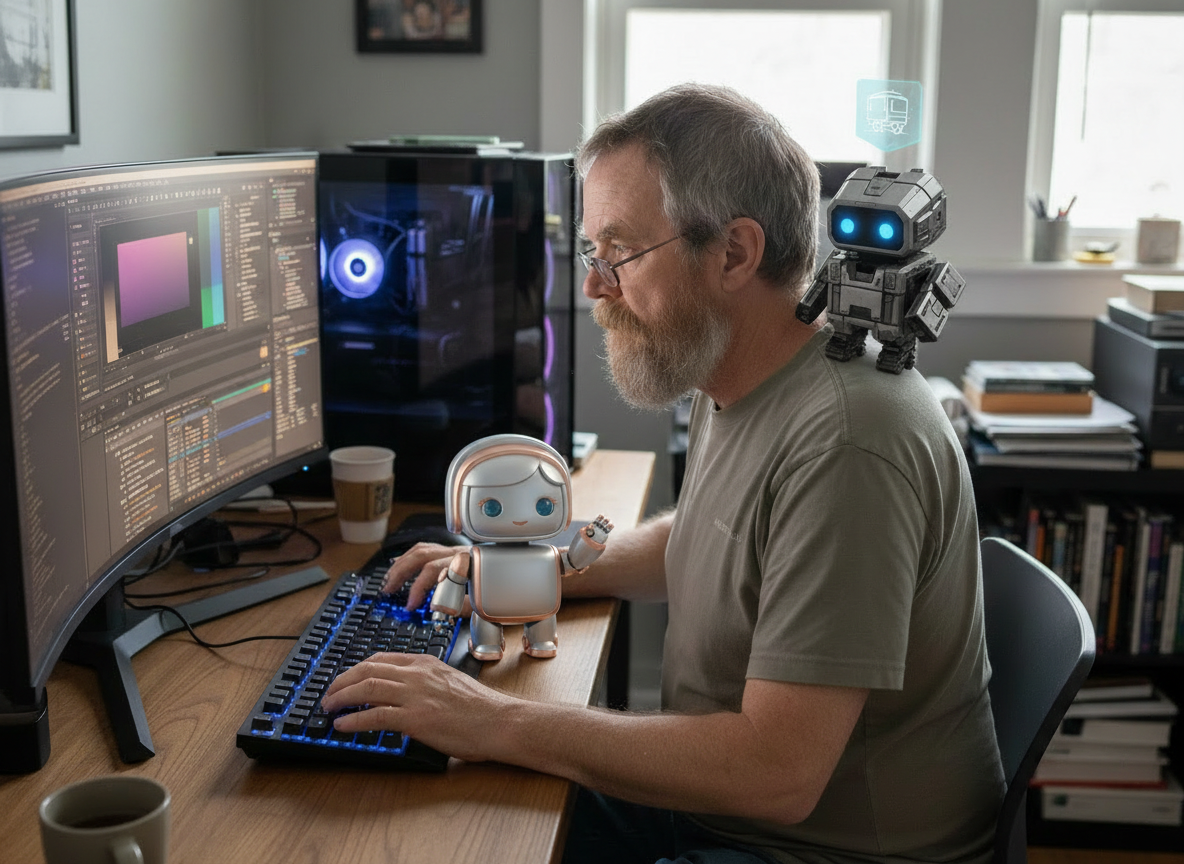
The Storyteller’s Angle offers a candid look at the late-night quiet from the perspective of an artist, writer, or veteran reflecting on life after dark. When the surrounding world goes quiet and the constant friction of daily obligations fades away, the mind naturally shifts its gears. During these late hours, the silence can operate as a double-edged sword. It can either manifest as a heavy weight of isolation or transform into a peaceful sanctuary where genuine creative clarity finally arrives. Understanding this shift reveals how stillness impacts our deepest reflections.

The Storyteller’s Angle
Finding Clarity in the Stillness of the Night
For anyone carrying a long history of memories, unresolved thoughts, or unexpressed ideas, the silence of the night acts as an immediate amplifier. During daylight hours, the constant noise of the world provides an easy shield. There are tasks to complete, messages to answer, and endless digital distractions competing for attention. But when those artificial loops are stripped away in the dark, you are left alone with whatever is sitting inside your mind.
The Storyteller’s Angle
For a writer or artist, this sudden stillness can initially feel oppressive. The blank page or empty canvas becomes a demanding mirror, raising uncomfortable questions about legacy, missed opportunities, and fading relevance. The pressure to articulate complex feelings or produce something meaningful can cause an engine to stall, making the silence feel heavy and suffocating.
Yet, if you sit through that initial discomfort without running toward easy distractions, the nature of the quiet begins to change. Fatigue slowly lowers your cognitive defenses, softening the rigid inner critic that usually edits every thought before it reaches the surface. The Storyteller’s Angle softens into a sanctuary where deep focus becomes possible. Away from the demands of an audience or the noise of daily life, the creative process reclaims its natural pace. Unfiltered reflections, raw memories, and authentic insights finally find room to breathe, allowing true creative clarity to emerge from the stillness.
The Storyteller’s Angle
Conclusion
Embracing the late-night quiet requires leaning into the stillness rather than fighting it. While the heavy silence can bring past regrets and unspoken thoughts to the surface, it also provides the exact room necessary for deep, authentic expression. By stepping past the initial discomfort, you discover that the dark hours offer an irreplaceable space to reflect, rebuild, and create on your own terms.
The Storyteller’s Angle
Popi sends…
Other Random Thoughts: Boredom in Isolation