
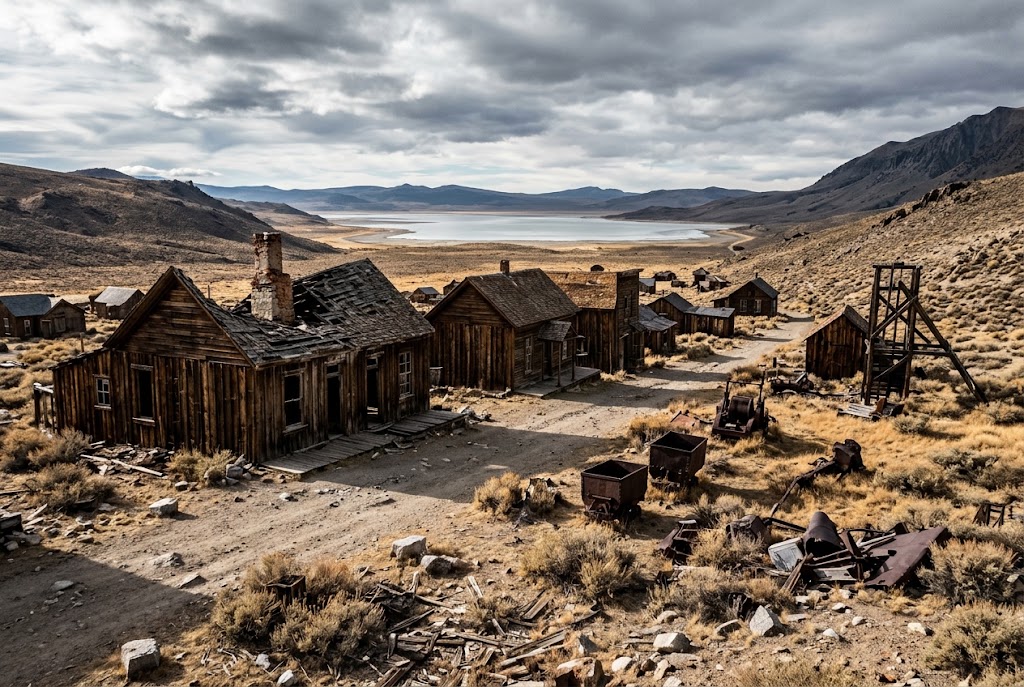
I’ve always had strong feelings about Native Americans. In Natives-Mining-Water we investigate the plight of the people, the mines, and the lake. Obviously, those early settlers were none to kind to any of them and that was by design. Imagine being so arrogant as to believe you were a higher order human than another and also needn’t worry about damaging the environment. It’s a wonder we survived.
Natives-Mining-Water
The Indigenous Inhabitants: The Kootzaduka’a People

The area’s original human inhabitants, the Kootzaduka’a People (a band of the Northern Paiute), derived their name from the nutritious alkali fly pupae (kootzabe) they harvested along the lake’s shores. Mono Lake, being an ancient, closed-basin saline lake, created a unique ecosystem where trillions of brine shrimp and alkali flies thrived along the water margin. Each summer and early autumn, as the fly pupae washed ashore in windrows along the saline shoreline, Kootzaduka’a families gathered to collect, dry, and process them into a rich, protein-packed staple that sustained the tribe through winter.
Beyond their seasonal harvests along the lake, the Kootzaduka’a established vital trade routes across the Sierra crest into Ahwahnee (Yosemite Valley) and the surrounding region. They traded fly pupae, obsidian from local volcanic fields, and pinyon pine nuts with the neighboring Western Miwok in exchange for acorns, shell beads, and basketry materials. Their intricate willow-twined basketry and deep ecological knowledge allowed them to flourish in the high-desert transition zone for thousands of years, establishing a sustainable relationship with the land long before European-American settlers arrived in the basin.


What happened to the Kootzaduka’a
- 1. Land Disruption and Survival Strategy
During the late 19th-century Eastern Sierra mining boom, non-indigenous settlers, loggers, and prospectors moved into the Mono Basin. The influx disrupted traditional harvest sites and access to pinyon pine groves and lake shorelines. Rather than fleeing their ancestral homeland, many Kootzaduka’a families adapted by incorporating seasonal wage labor—working on local ranches, in sawmills, and in nearby towns like Lee Vining—while continuing to gather fly pupae (kootzabe) and pinyon pine nuts according to seasonal cycles.
- 2. Enrollment with Neighboring Bands
Natives-Mining-Water
Because no separate reservation was created exclusively for the Mono Basin Kootzaduka’a during the treaty era, many descendants became enrolled with neighboring federally recognized tribes, most notably the Bridgeport Indian Colony (located just north of the Mono Basin) and the Mono Lake Paiute community.
- 3. Cultural Preservation and Environmental Stewardship
Throughout the 20th century and into today, Kootzaduka’a elders and cultural leaders played a crucial role in preserving ancestral skills, including intricate willow basketry, native language, and ecological stewardship. When the water diversions of the mid-20th century threatened Mono Lake, Kootzaduka’a community members partnered with conservation groups to advocate for the protection and restoration of the lake’s delicate ecosystem and traditional harvest areas.
- 4. Ongoing Fight for Federal Recognition
Today, the Mono Lake Kootzaduka’a Tribe continues its long-standing efforts to achieve independent federal recognition. They maintain a active tribal council dedicated to preserving their cultural heritage, protecting ancestral burial sites, and exercising sovereignty over their historical lands in the Mono Basin.
The Demise of the Mining Communities – Natives-Mining-Water
The neighboring town of Lee Vining owes its origins to Leroy Vining, a prospector who led a group of miners over Tioga Pass in 1852 during the California Gold Rush. Vining established a sawmill along what is now Lee Vining Creek in the 1850s specifically to supply timber to the burgeoning mining camps at Lundy, Monoville, and Bodie. Located in the hills north of Mono Lake, Bodie quickly grew into a wild, booming city of nearly 10,000 residents at its peak in 1879–1880.

However, the demise of these boomtowns was driven by classic mining economics, harsh geography, and resource exhaustion rather than environmental changes to the lake. By the mid-1880s, the rich gold and silver veins began playing out, forcing major mining companies to consolidate or shut down operations. Furthermore, winters in the Mono Basin were brutal, with gale-force winds and heavy snowpack that made isolation and fuel costs unbearable. Devastating fires in 1892 and 1932 destroyed most of Bodie’s business district, and by the 1910s and 1920s, Bodie and Lundy were essentially ghost towns. The collapse of the mining communities happened decades before any major water engineering projects touched the region.
The Story Behind the Water Diversion – Natives-Mining-Water
While the demise of the mining camps was economic, the environmental crisis of Mono Lake was driven by urban growth hundreds of miles to the south. In the early 20th century, the rapidly expanding city of Los Angeles sought reliable water sources. After completing the Owens Valley Aqueduct in 1913, the Los Angeles Department of Water and Power (LADWP) extended its aqueduct system northward into the Mono Basin.
In 1941, LADWP began diverting four of Mono Lake’s five major freshwater tributaries: Lee Vining Creek, Rush Creek, Parker Creek, and Walker Creek. Instead of flowing naturally into Mono Lake, this fresh water was piped south into the Los Angeles Aqueduct. Because Mono Lake is a terminal lake with no natural outlet, it relies entirely on tributary streams to maintain its water levels. Over the next four decades, the lake’s surface level dropped by 45 vertical feet, losing half of its water volume and doubling its salinity. This dramatic drop exposed the iconic underwater tufa towers—limestone formations created by underwater freshwater springs mixing with alkaline lake water—and created land bridges to Negit Island, exposing nesting bird populations to land predators.

In 1978, the grassroots Mono Lake Committee was formed to fight the diversions. Decades of legal battles under the Public Trust Doctrine and state water board rulings culminated in landmark decisions in the 1990s that ordered LADWP to reduce diversions and allow Mono Lake to slowly recover toward a sustainable water level. Sitting on a sun-warmed bench near the visitor center as the twilight turns the sky to deep violet, watching the shadows of the Sierra crest lengthen across the tufa towers, the sheer endurance of the land and its people settles deep into the spirit.
The Lake, the land, and the People are winning – finally.

continued in: Mono Lake to Tioga Lake
what came before: Green Lakes to Mono Lakes
from the start: High Country
Natives-Mining-Water
There’s reason to feel good about this episode as you’ve seen. Would that all our environmental and social issues were as addressable.
Popi sends…
Popi’s Random Thoughts: Quick Takes & Opinions

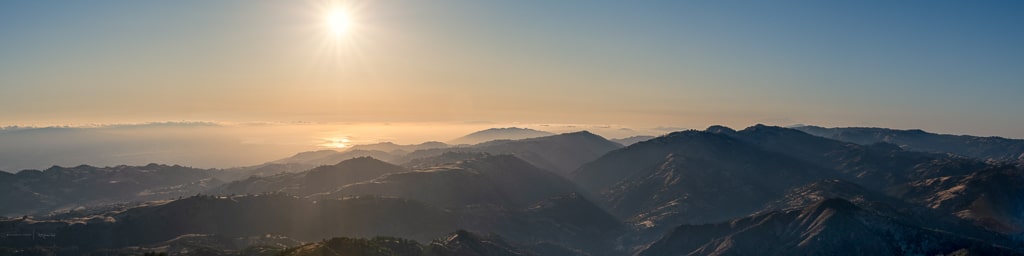


Can you see it?