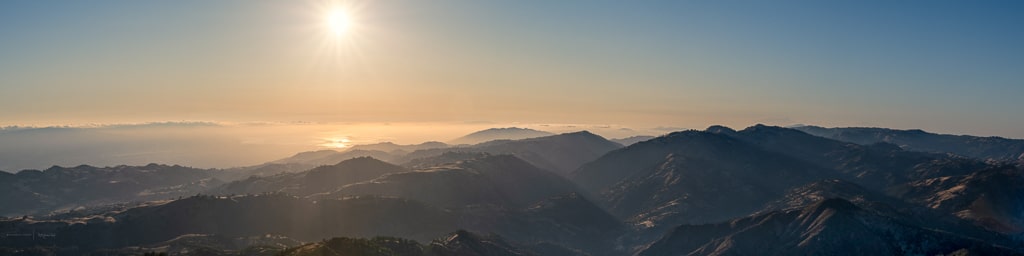
22Jun-Photo Release – Earlier I showed the morning shoot. This is the evening shoot, which presents it’s own problems. Once again I underexposed and had to use Photoshop to bring out the shadow details. Once again my magical D850 captured enough data to pull details out again. I wonder. Should I say that I made the shots, and Photoshop made them viewable?

22Jun-Photo Release
October 2, 2019
There’s a couple of shots of a field with geese all over it. The Geese own that field. Anyone who’s experienced a goose field knows what I’m talking about.


22Jun-Photo Release
Shooting at the very end of the day—during the golden hour, sunset, and into twilight—is when the light is most dramatic, but it is also when the technical and physical challenges pile up the fastest.
Here are the primary hurdles a photographer faces when chasing that final light:
1. The Exposure Race Against Time
As the sun dips below the horizon, ambient light doesn’t just fade; it drops exponentially. If you are shooting fast-moving subjects like wildlife or birds in flight, this triggers a brutal trade-off:
- To freeze motion, you need a high shutter speed (often $1/1000\text{s}$ to $1/2000\text{s}$).
- To feed the sensor enough light at those speeds, you have to widen your aperture or let your ISO climb into noisy territory. Balancing noise reduction while maintaining tack-sharp fine details (like feathers or fur) becomes a razor-thin tightrope.
2. Autofocus “Hunting” and Sluggishness
Camera autofocus systems rely heavily on contrast to lock onto a subject. As the sun sets and the light flattens or dims:
- The camera’s phase-detection points struggle to find distinct edges.
- Lenses begin to “hunt”—driving the focus element all the way forward and back—causing you to completely miss the brief moment a bird takes flight or an animal looks toward the lens.
3. Extreme Dynamic Range Challenges
If you are shooting toward the setting sun to capture rim lighting or a golden glow, the contrast is massive. The sky is intensely bright, while your subject’s front is cast in deep shadow.
- You are forced to make a hard choice: expose for the background and turn your subject into a pure silhouette, or expose for the subject and completely blow out the beautiful evening sky into a featureless white mask. High-dynamic-range sensors help, but they still have their limits when shooting raw action.
4. Rapidly Shifting Color Temperature
The light shifts from warm gold to a deep, cool violet-blue within minutes. Leaving your camera on Auto White Balance (AWB) can lead to wildly inconsistent shots across a single sequence, as the camera tries to “correct” the beautiful native warmth or depth of the twilight.
5. Environmental and Fatigue Factors
Beyond the technical settings, the physical environment changes rapidly at dusk:
- The elements: Evening winds frequently pick up near bodies of water or open fields, introducing camera shake—especially if you’re handling a heavy telephoto setup. Temperatures drop quickly, and insects often become active right as the light gets perfect.
- Fatigue: If you’ve been out scanning the landscape or holding a heavy rig for hours, muscle fatigue peaks just as you need your steadiest hands for lower shutter speeds.
The Silver Lining: The payoff for managing these issues is unparalleled. The directionality of late-day light creates shapes, textures, and moods that are impossible to replicate at any other time of day.
Popi luvs ya!
Look for 👉Popi’s Photo Releases👈 in your mailbox with a free subscription.
…or…
Slide over 👉here👈 for a photo show instead